Guides & advice

Choose a card to view the full guide.

Drop kerbs

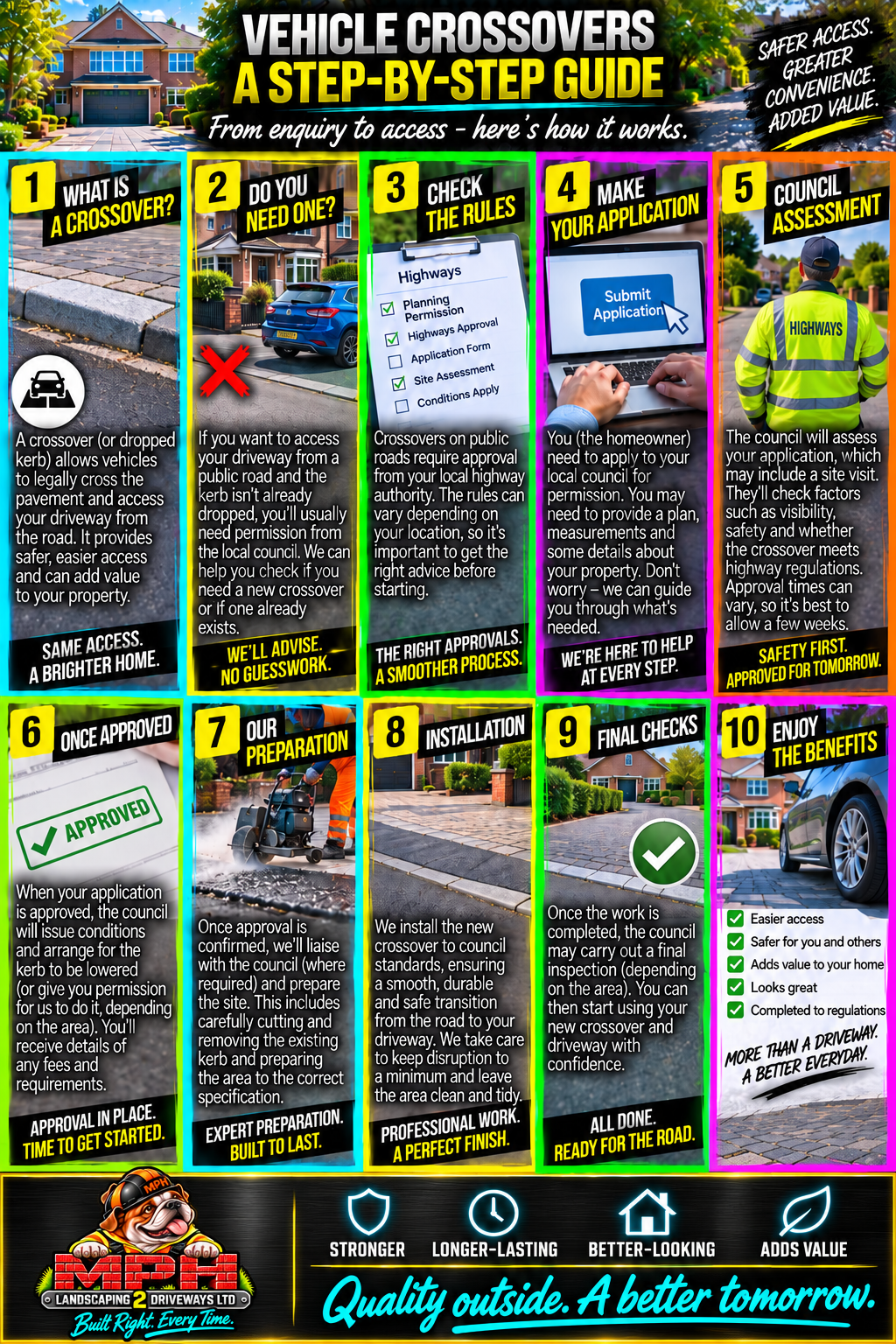
Vehicle crossovers: a step-by-step guide — illustrated guide

Vehicle crossovers: a step-by-step guide

Follow the stages of a vehicle crossover project, from your first enquiry and application through to preparation, installation and final checks.

Key points: Vehicle crossovers: a step-by-step guide
  • Understand how a dropped kerb provides access between the road and your driveway.
  • Check the relevant highway authority’s requirements before arranging work.
  • Plan the preparation, installation and any final inspection around the approval conditions.
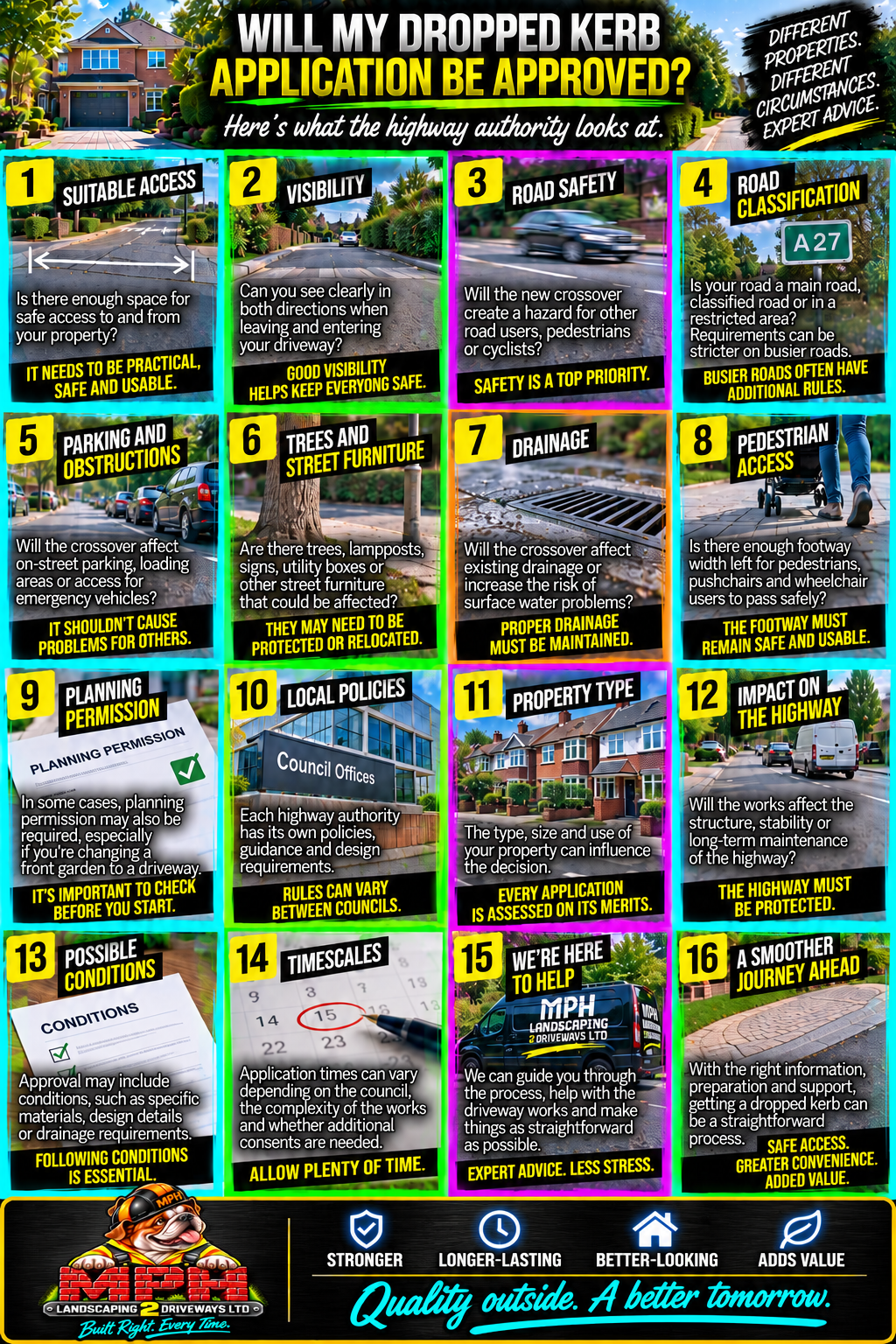
Will my dropped kerb application be approved? — illustrated guide

Will my dropped kerb application be approved?

Explore the site conditions considered during a dropped kerb application, including visibility, access, drainage and the effect on other people using the highway.

Key points: Will my dropped kerb application be approved?
  • Consider space for vehicles, pedestrian access and nearby obstructions.
  • Check how trees, street furniture and existing drainage could affect the proposal.
  • Requirements and timescales vary; an application is assessed on its own circumstances.

Driveways

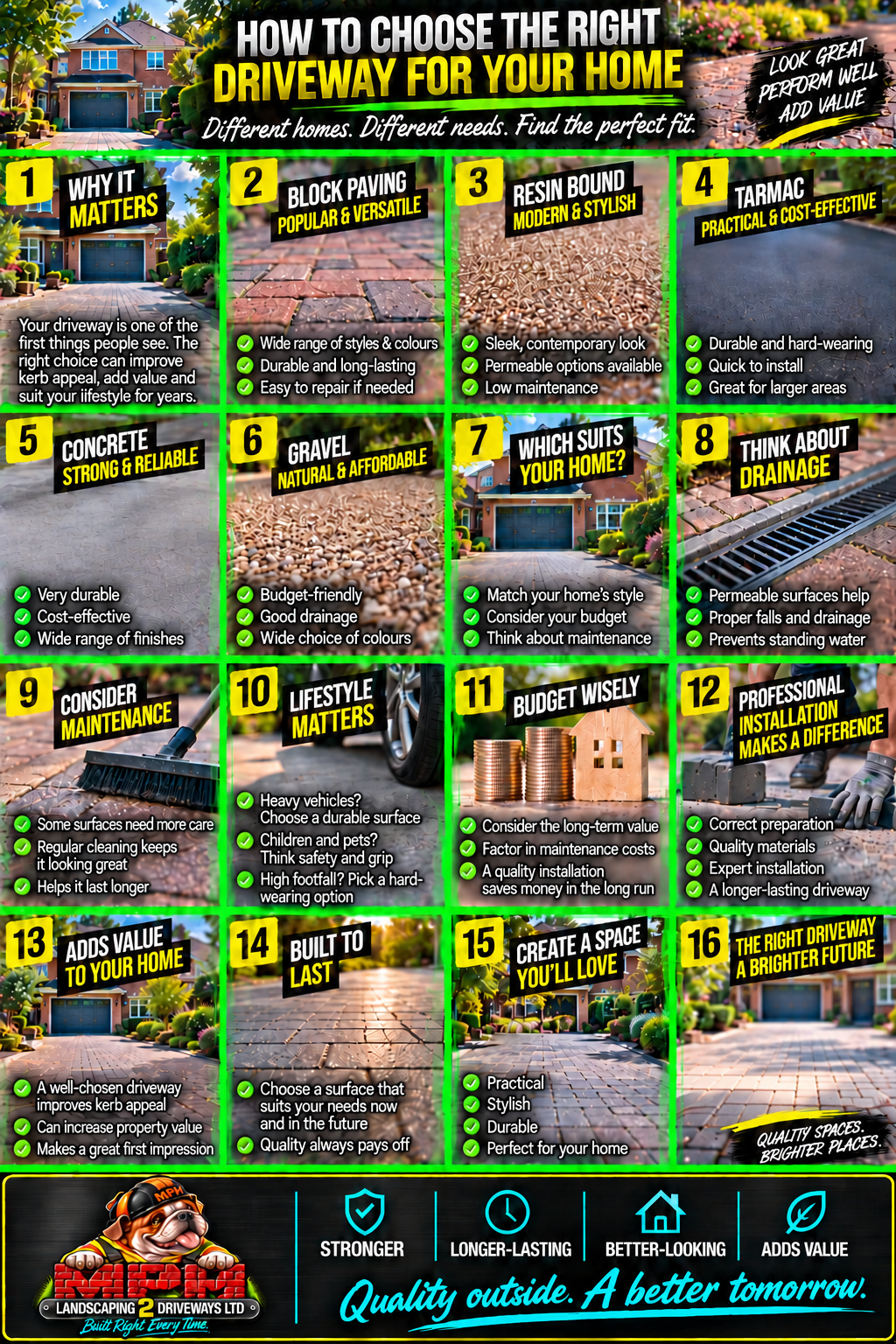
Choosing a driveway for your home — illustrated guide

Choosing a driveway for your home

Compare block paving, resin bound, tarmac, concrete and gravel with your home, budget and daily use in mind. Think about drainage and ongoing care as well as appearance.

Key points: Choosing a driveway for your home
  • Consider the vehicles, foot traffic and available space the driveway needs to accommodate.
  • Compare installation choices with future maintenance requirements.
  • Match the finished surface to the property and a suitable drainage design.
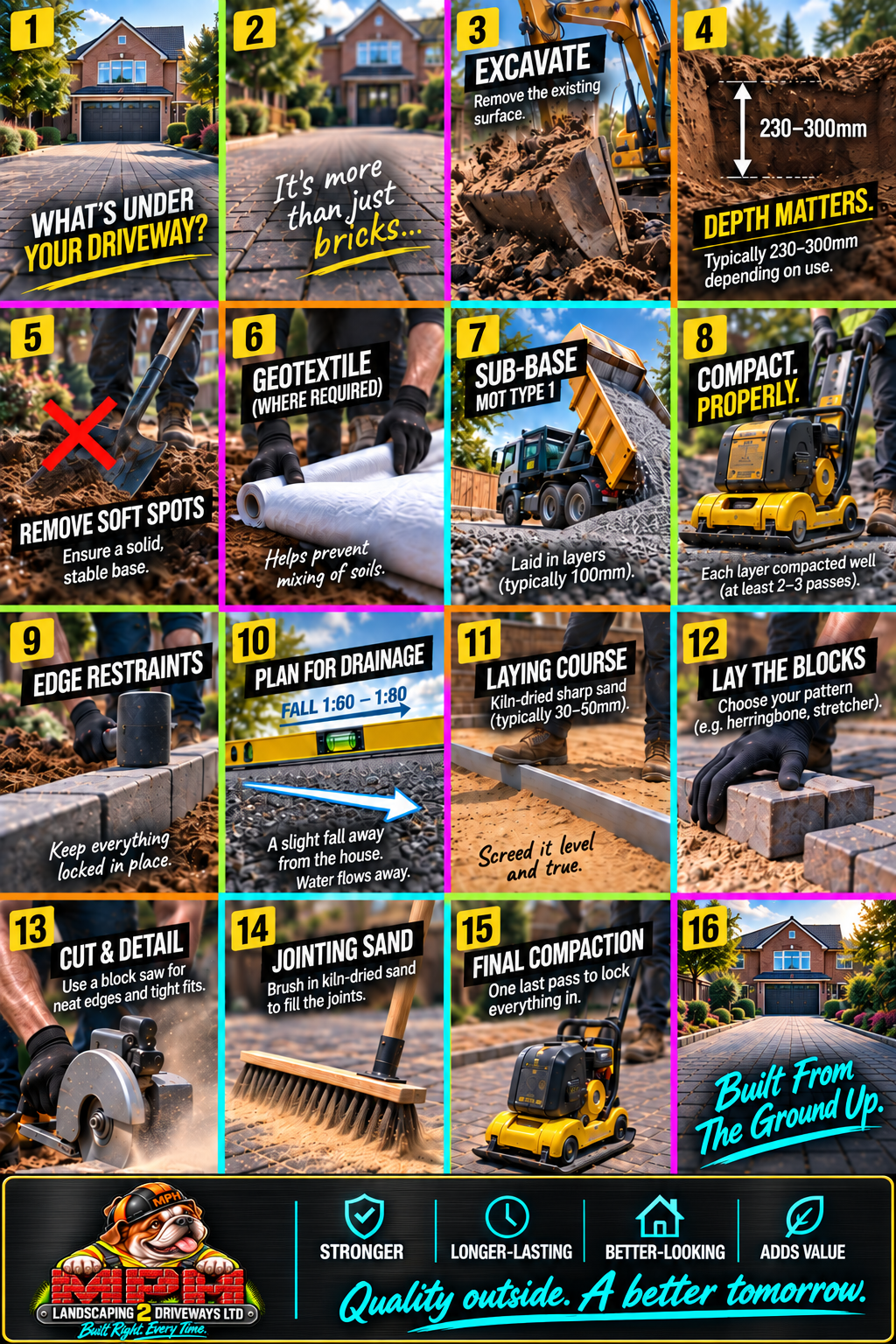
Driveway construction process — illustrated guide

Driveway construction process

See what goes beneath a block-paved driveway, from excavation and a stable sub-base to edge restraints, drainage, laying the blocks and finishing the joints.

Key points: Driveway construction process
  • Preparation starts with assessing the ground and removing unsuitable material.
  • The sub-base, bedding and drainage need to suit the site and intended use.
  • Careful laying, cutting, jointing and compaction complete the surface.
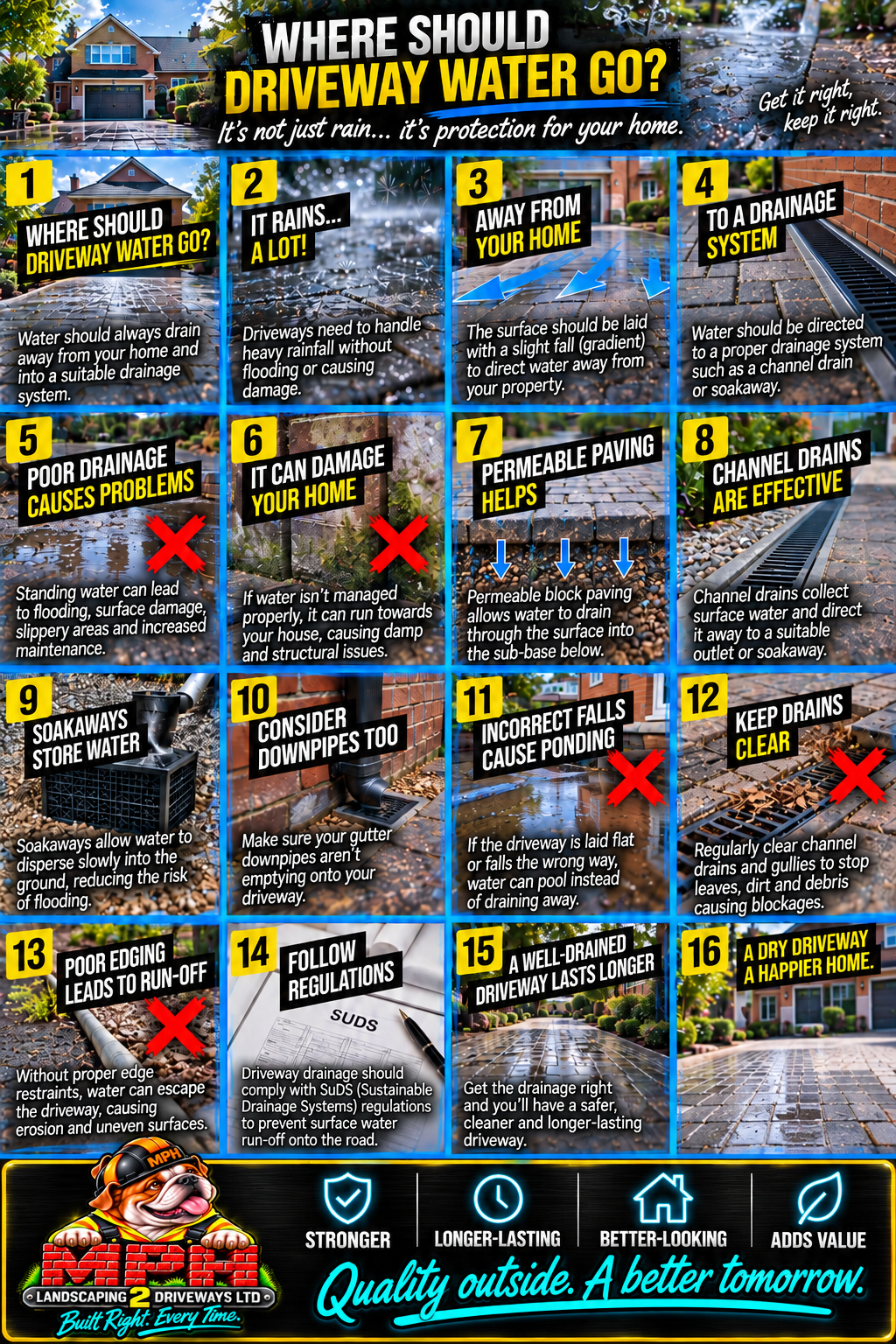
Where should driveway water go? — illustrated guide

Where should driveway water go?

Good driveway drainage starts with deciding where rainfall will go. Explore how levels, falls, channels and permeable surfaces work together to manage water.

Key points: Where should driveway water go?
  • Plan drainage alongside the driveway layout and construction.
  • Choose a drainage approach suited to the surface and ground conditions.
  • Keep channels and outlets clear so the system can continue working.
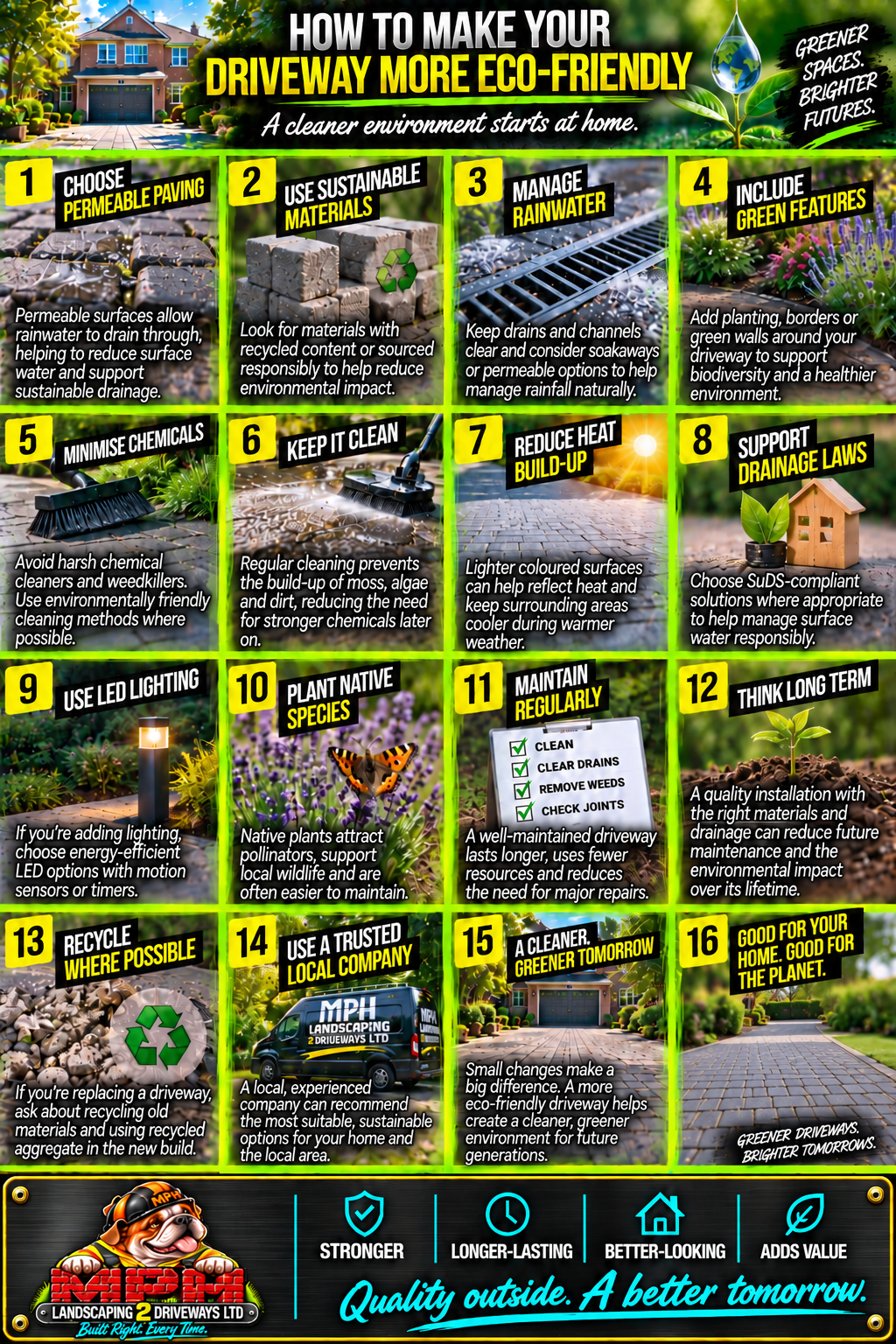
Making your driveway more eco-friendly — illustrated guide

Making your driveway more eco-friendly

Explore ways to make a driveway project more environmentally considerate, including permeable options, responsible material choices, planting, rainwater management and long-term maintenance.

Key points: Making your driveway more eco-friendly
  • Consider a suitable permeable construction and how rainfall will be managed.
  • Discuss recycled materials and retaining or adding planting where practical.
  • Look after the finished driveway to reduce avoidable repairs and replacement.
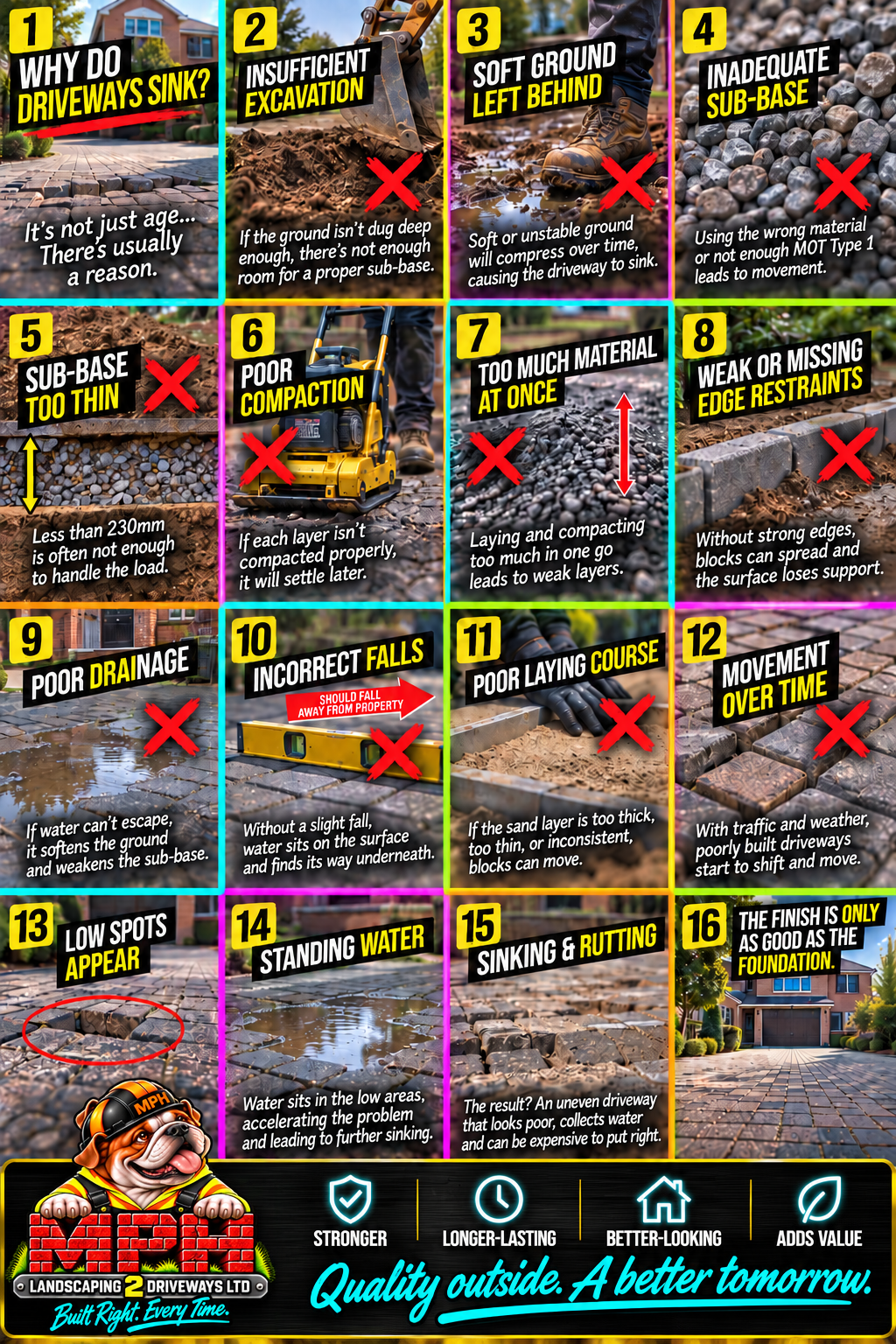
Why do driveways sink? — illustrated guide

Why do driveways sink?

Understand why a driveway can settle or develop dips. This guide looks beneath the surface at preparation, compaction, drainage and the loads a driveway carries.

Key points: Why do driveways sink?
  • Soft ground and an inadequately prepared sub-base can allow movement.
  • Water and vehicle loading can expose weaknesses in the construction.
  • Investigate the underlying cause before repairing or relaying the affected area.
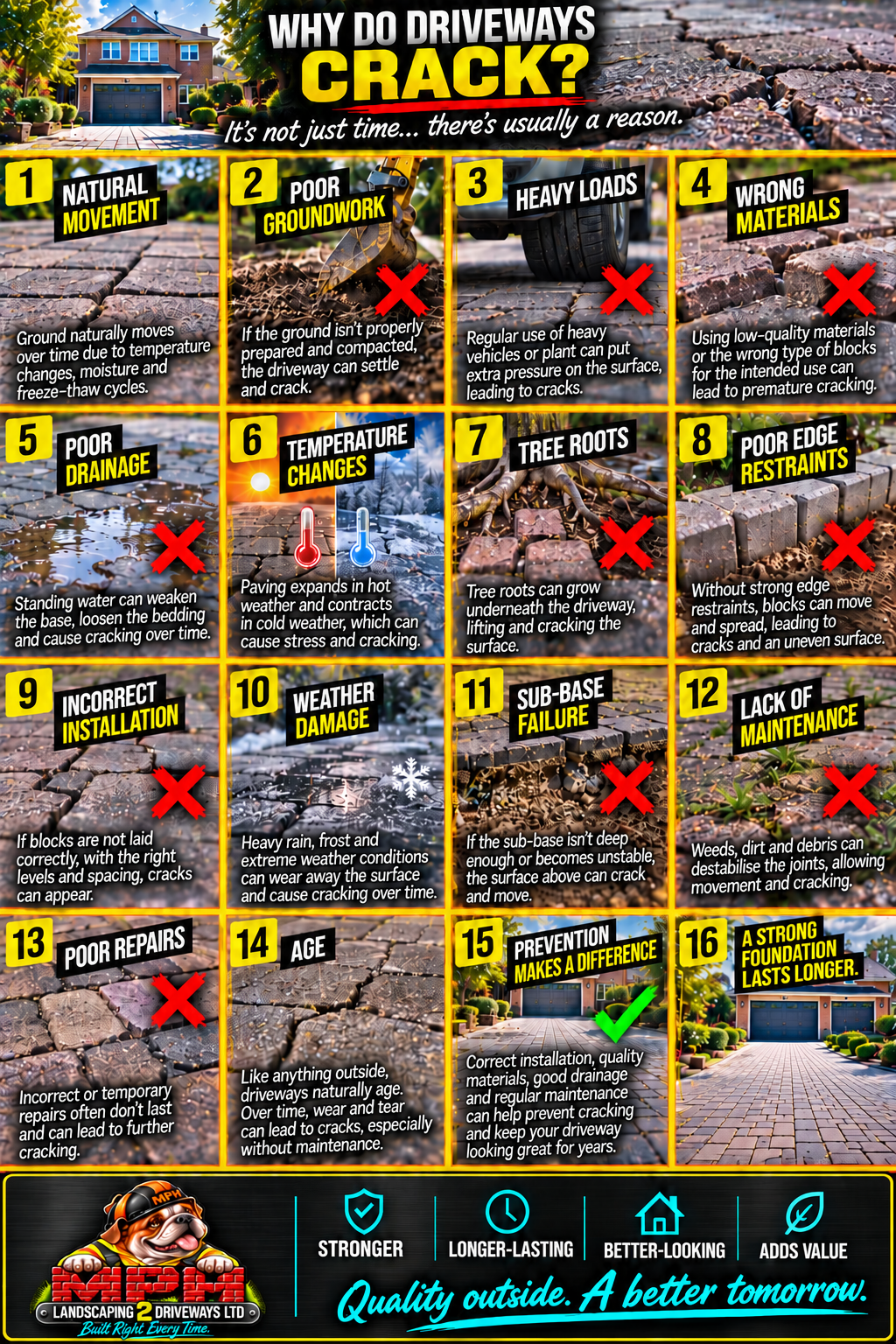
Why do driveways crack? — illustrated guide

Why do driveways crack?

Explore common reasons for driveway cracking, including movement beneath the surface, water, weather and loading, and why identifying the cause helps guide repairs.

Key points: Why do driveways crack?
  • The visible crack may reflect a problem in the supporting layers.
  • Different driveway materials respond differently to weather and movement.
  • Assess the condition of the surrounding surface before choosing a repair.
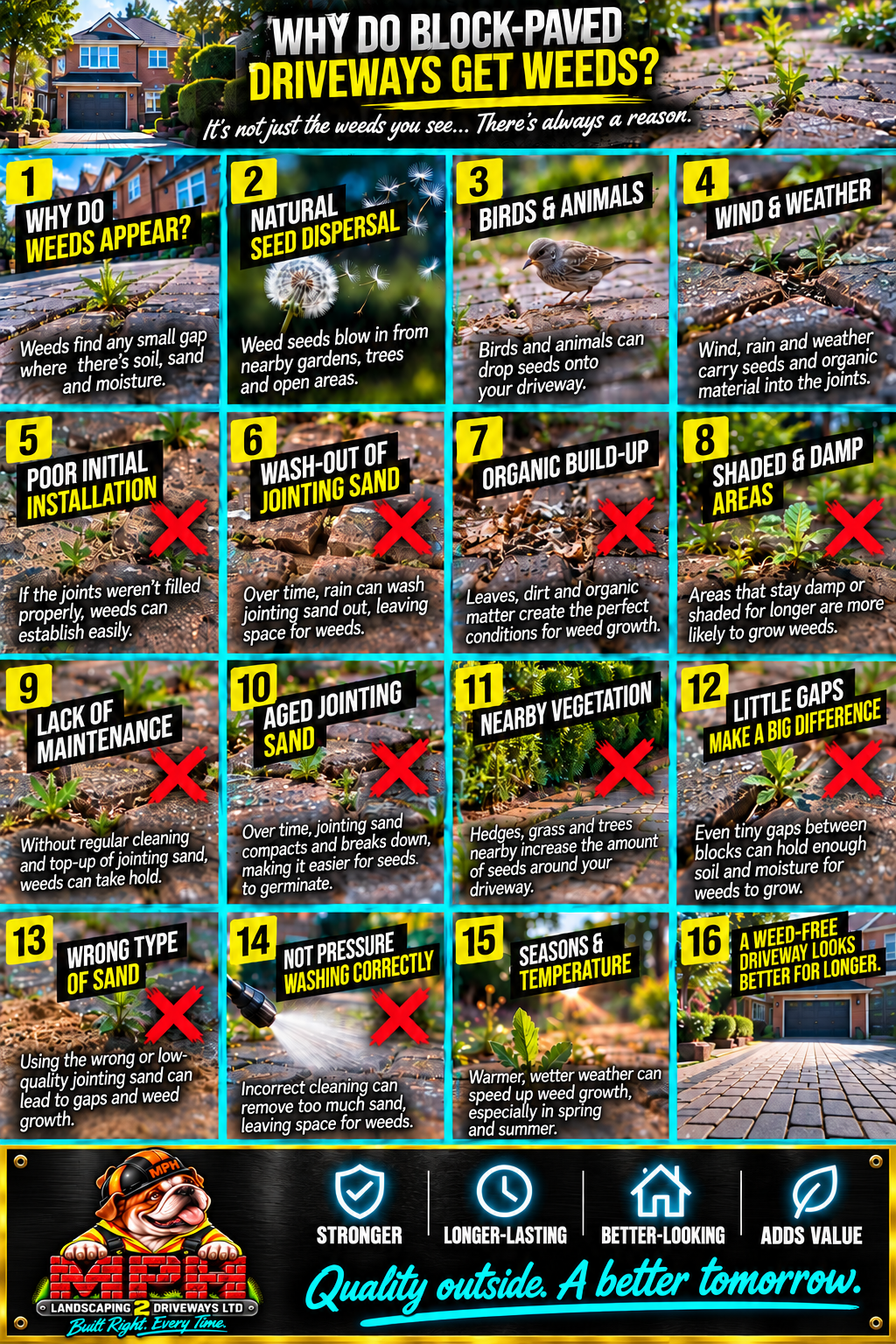
Why do block-paved driveways get weeds? — illustrated guide

Why do block-paved driveways get weeds?

Learn how weeds establish themselves in block-paving joints and why regular cleaning and joint maintenance matter for keeping a driveway looking tidy.

Key points: Why do block-paved driveways get weeds?
  • Dirt and organic material can collect between paving blocks.
  • Remove weeds and keep the surface clear of leaves and debris.
  • Check the condition of the joints and use maintenance methods suited to the paving.
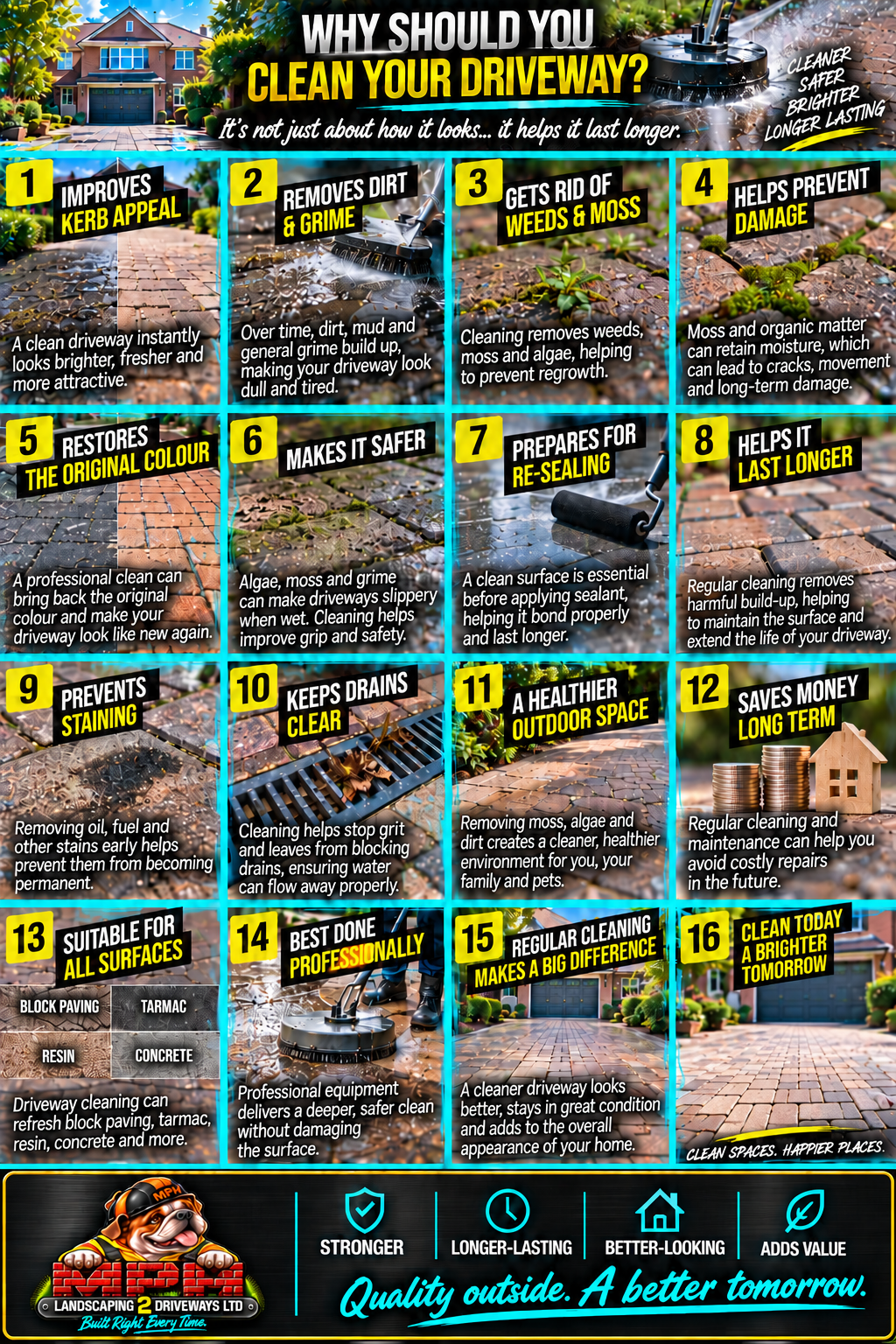
Why should you clean your driveway? — illustrated guide

Why should you clean your driveway?

Regular cleaning helps remove dirt, moss, algae and stains from a driveway. This guide explains how suitable care can improve its appearance and condition.

Key points: Why should you clean your driveway?
  • Clear debris before it builds up across the surface and in drainage channels.
  • Choose cleaning products and equipment appropriate for the driveway material.
  • Check joints and edges after cleaning and address maintenance needs early.
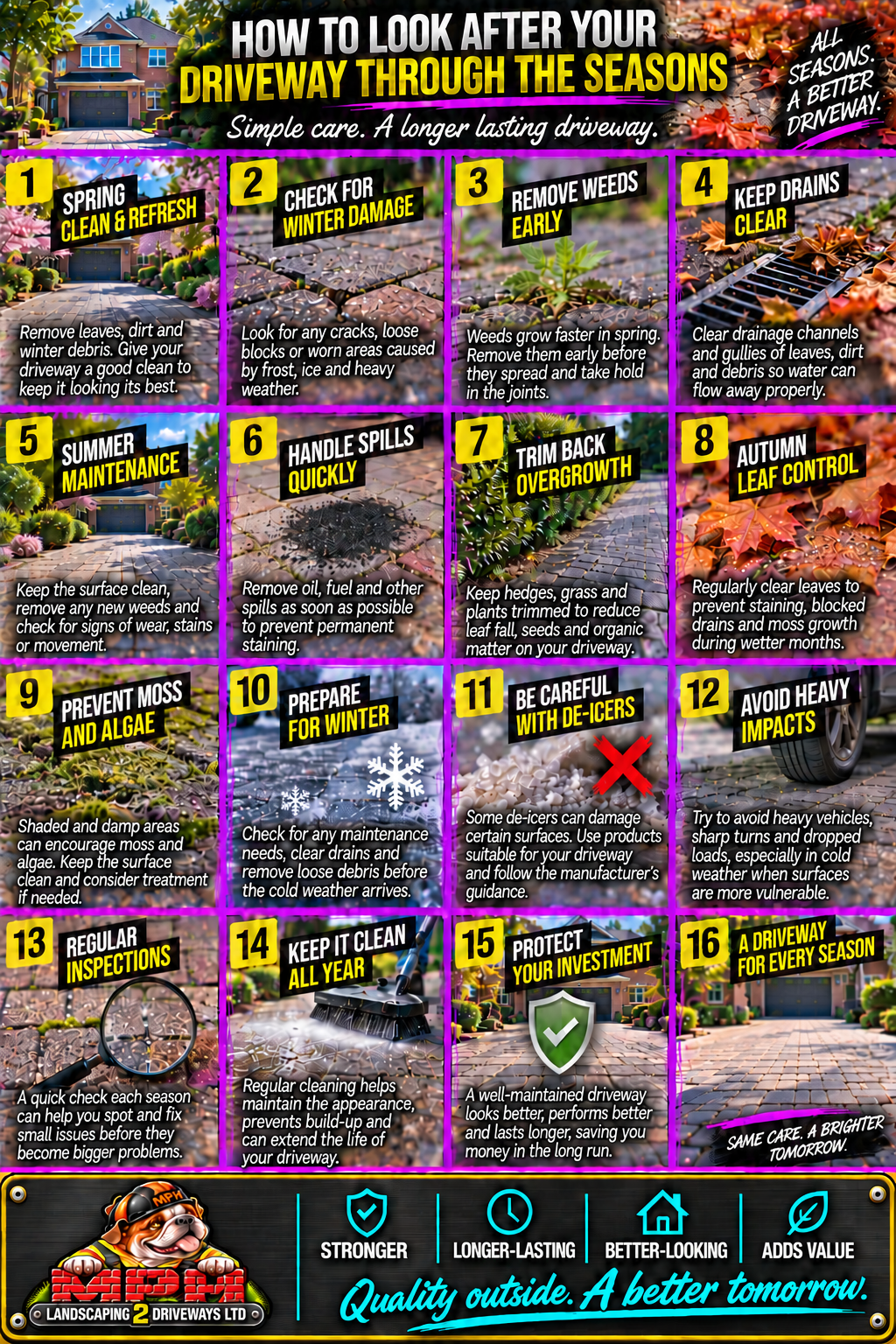
Driveway care through the seasons — illustrated guide

Driveway care through the seasons

Keep on top of driveway care through the seasons, from spring cleaning and summer spills to autumn leaves, clear drains and winter surface checks.

Key points: Driveway care through the seasons
  • Look for loose areas or damage when checking the driveway after winter.
  • Deal with spills, weeds and leaf build-up before they become harder to manage.
  • Use winter treatments suited to the surface and follow the product guidance.
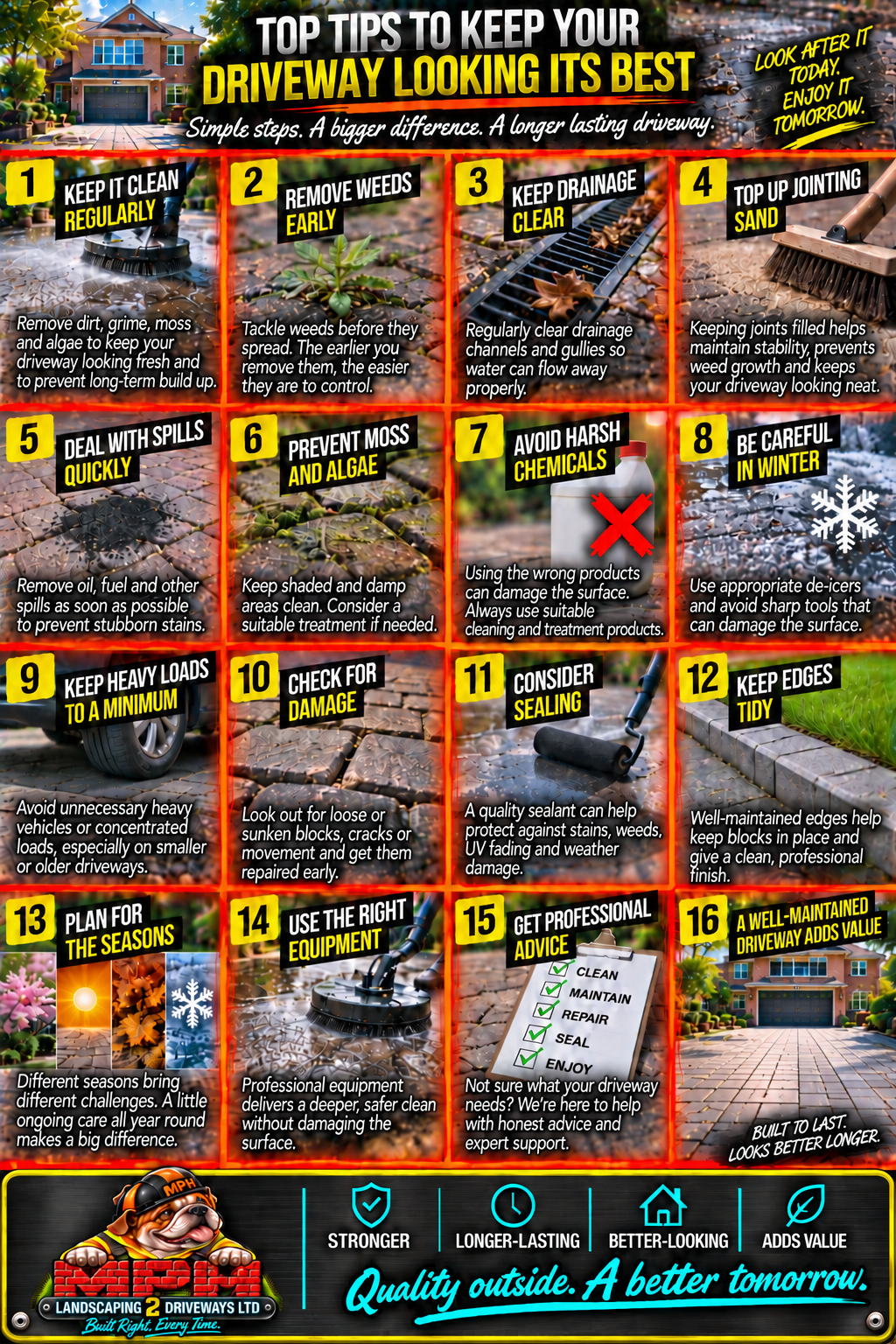
Keep your driveway looking its best — illustrated guide

Keep your driveway looking its best

A practical driveway maintenance checklist covering cleaning, spills, drainage, joints and edges. Small checks help you spot problems before they develop further.

Key points: Keep your driveway looking its best
  • Inspect the surface for cracks, movement and areas that need attention.
  • Keep drainage clear and maintain paving joints where required.
  • Use suitable equipment and seek advice when the right repair is unclear.

Patios & paving

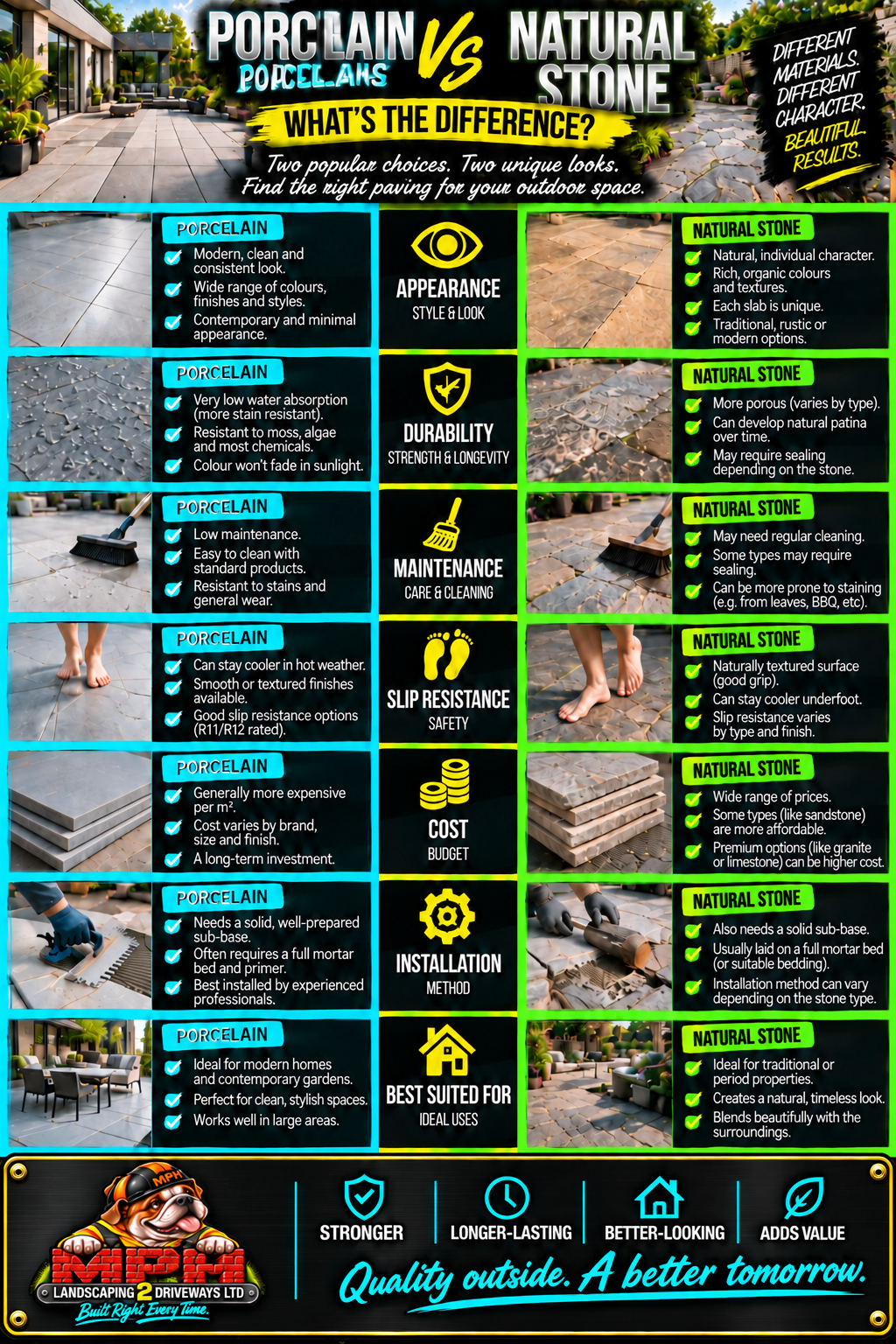
Porcelain versus natural stone — illustrated guide

Porcelain versus natural stone

Compare porcelain and natural stone for your patio, looking at appearance, care, cost, grip and installation requirements to find a material suited to your outdoor space.

Key points: Porcelain versus natural stone
  • Porcelain offers a consistent finish; natural stone has individual variations in colour and texture.
  • Compare the specific products rather than assuming all slabs perform alike.
  • Allow for installation requirements and future maintenance when choosing.
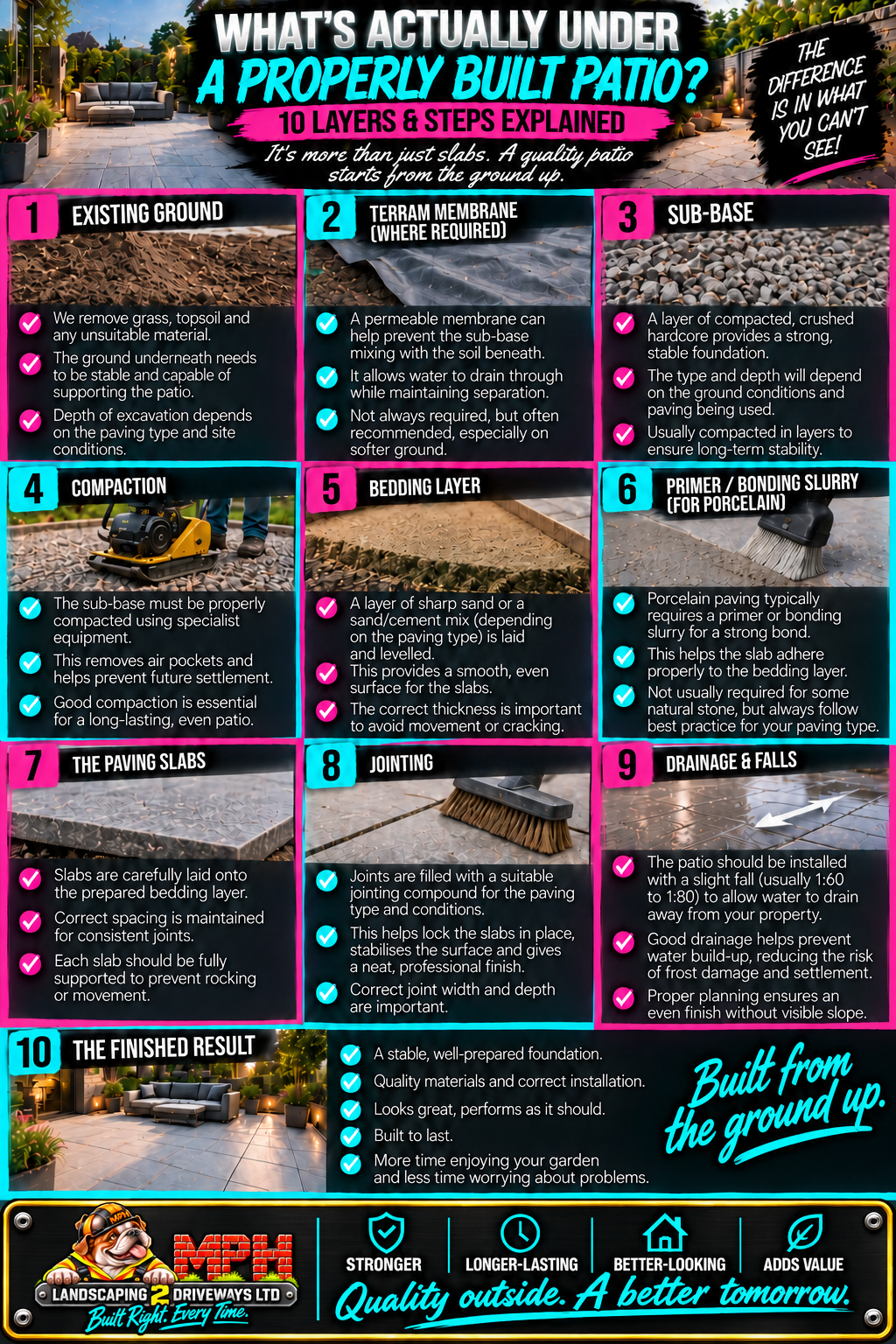
What is under a properly built patio? — illustrated guide

What is under a properly built patio?

Take a look beneath a finished patio at the ground, sub-base, bedding and jointing, and see how these elements combine with drainage to support the paving.

Key points: What is under a properly built patio?
  • The construction should reflect the ground conditions and selected paving.
  • Membranes, bedding and bonding products have different roles within the system.
  • Correct levels, support and finishing are as important as the visible slabs.
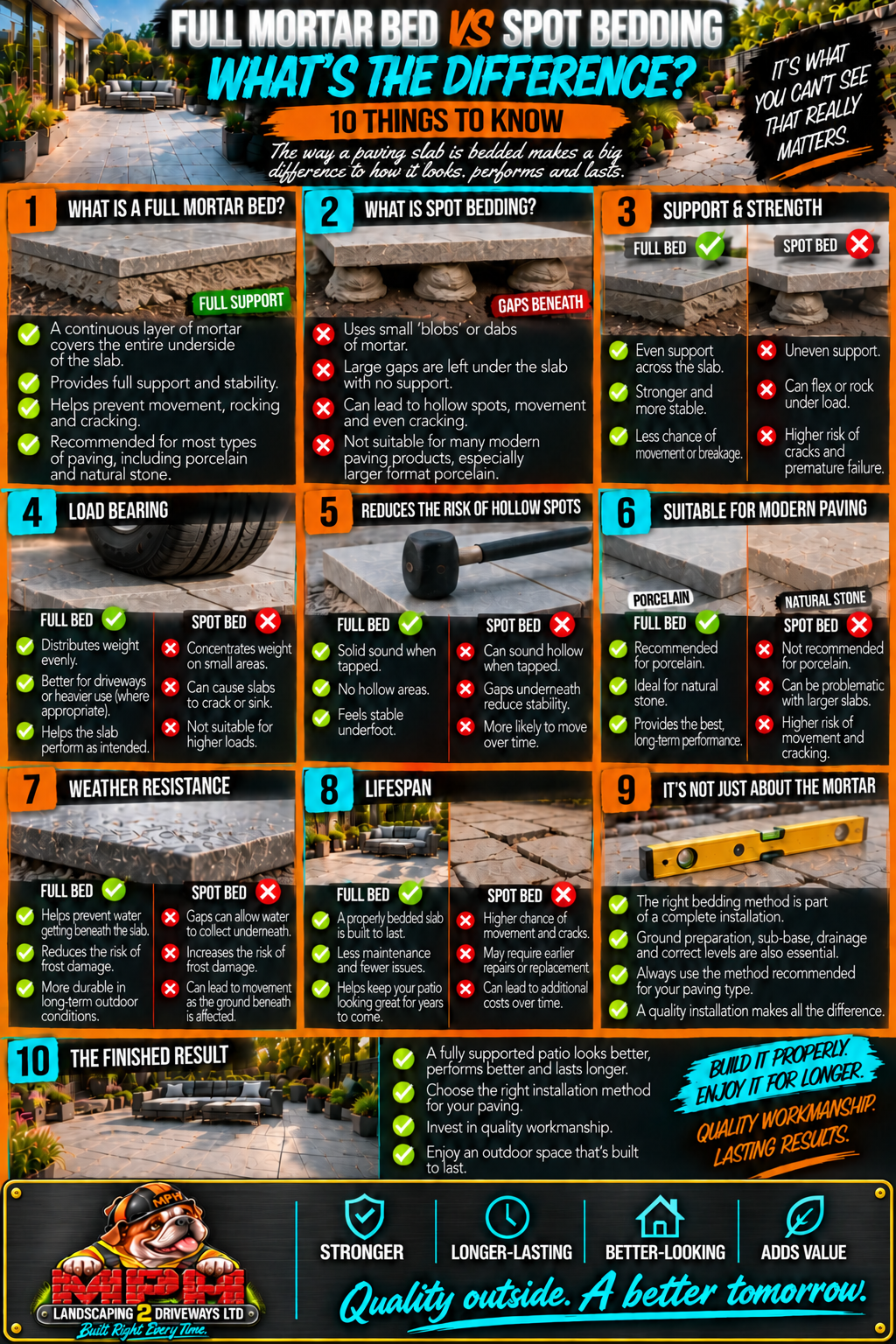
Full mortar bed versus spot bedding — illustrated guide

Full mortar bed versus spot bedding

Compare continuous mortar bedding with isolated spots of mortar. This guide explains how the support beneath paving affects stability, gaps and the finished surface.

Key points: Full mortar bed versus spot bedding
  • A full bed supports the slab across its underside.
  • Isolated mortar spots leave unsupported areas beneath the paving.
  • Choose the bedding method specified for the paving and its intended use.
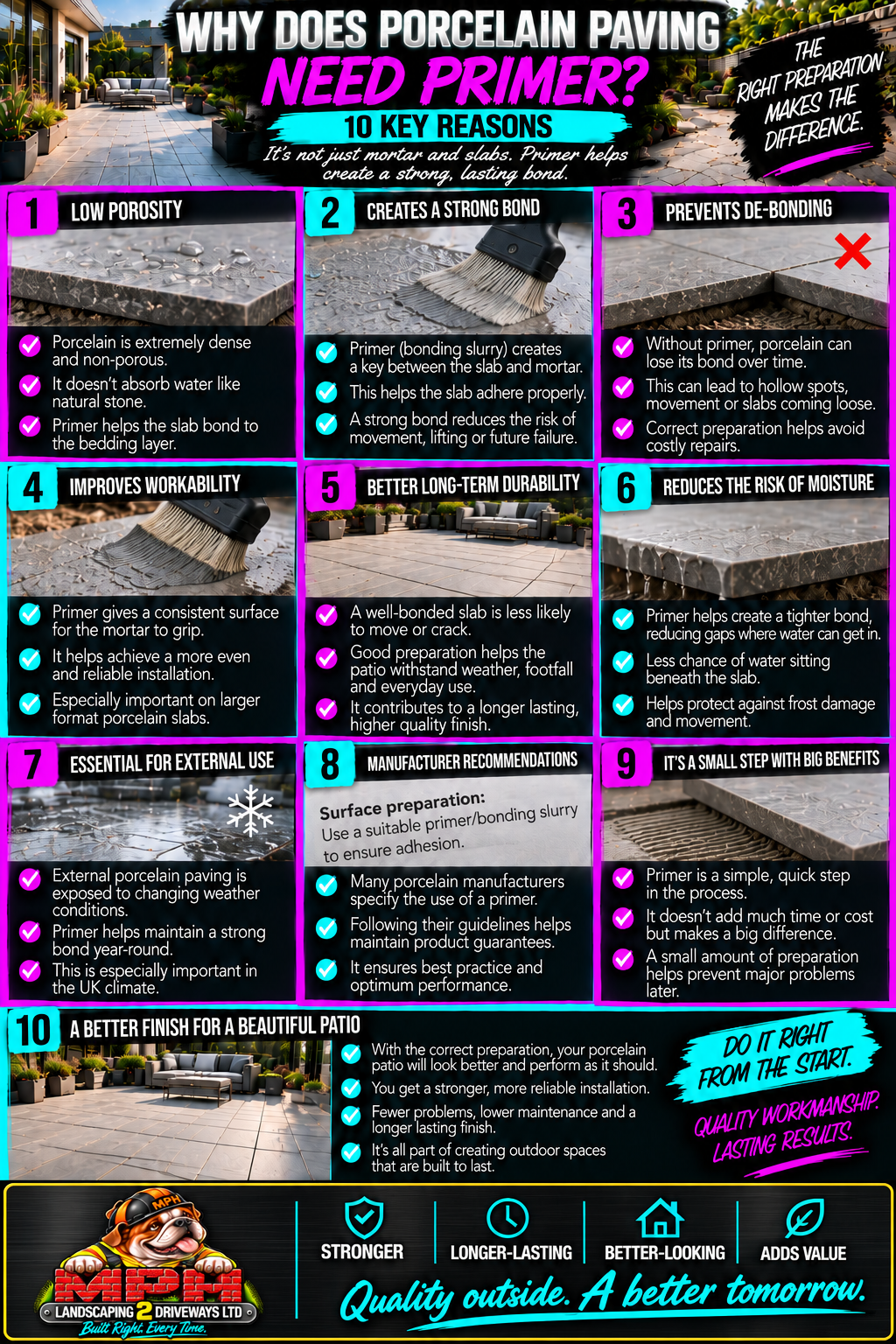
Why does porcelain paving need primer? — illustrated guide

Why does porcelain paving need primer?

Understand the role of primer or bonding slurry in porcelain paving and how the bond between a slab and its bedding contributes to a secure installation.

Key points: Why does porcelain paving need primer?
  • The bonding layer helps connect the underside of the slab to the bedding.
  • Preparation and application must suit the selected paving and installation products.
  • Follow the manufacturers’ instructions for the complete paving system.
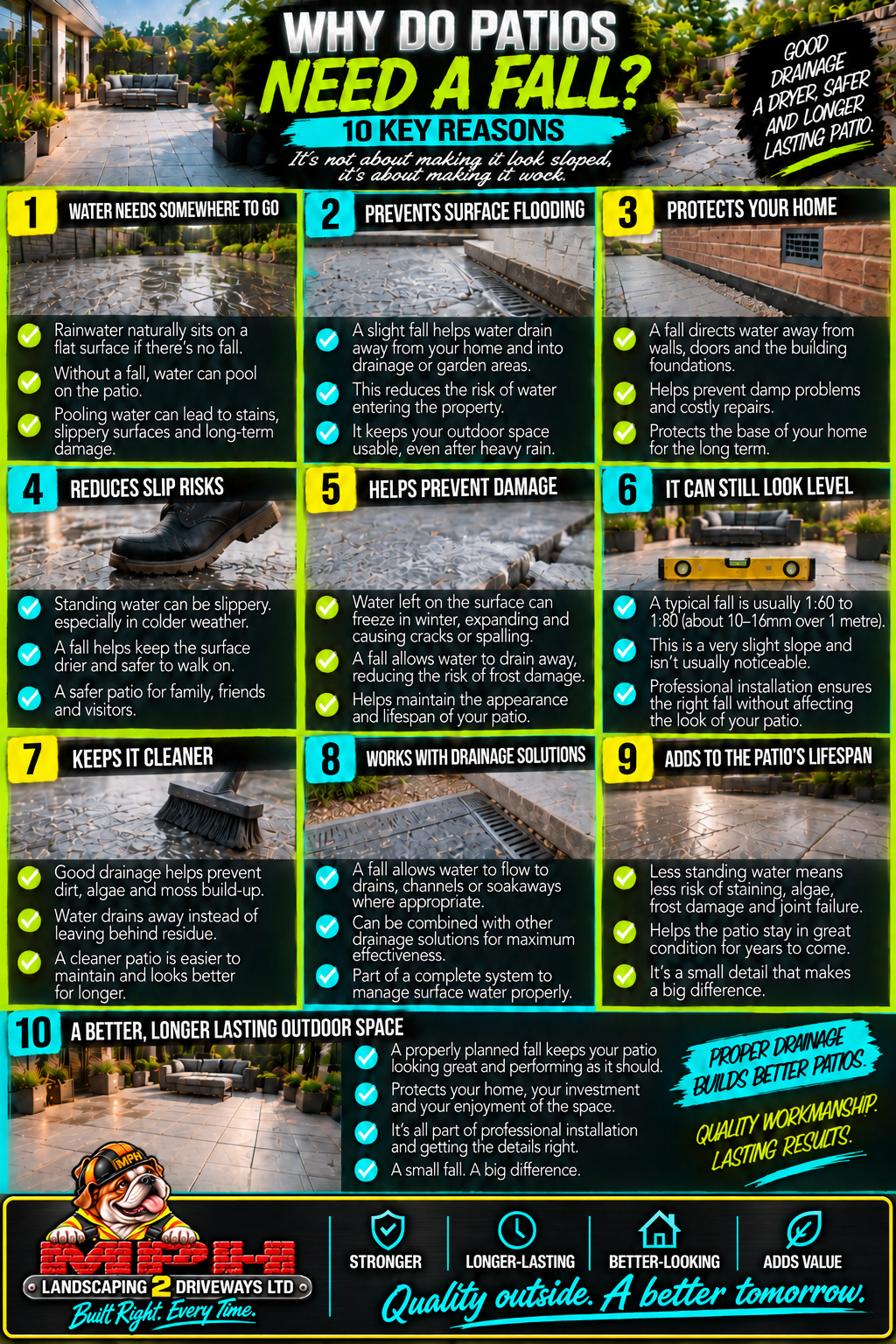
Why do patios need a fall? — illustrated guide

Why do patios need a fall?

A patio needs a planned fall to help rainfall drain away. Explore how levels and drainage can reduce standing water while keeping the finished space practical.

Key points: Why do patios need a fall?
  • Consider where water will go before the paving is laid.
  • Coordinate the fall with buildings, drainage channels and the surrounding garden.
  • Keep the drainage route clear after the patio is completed.
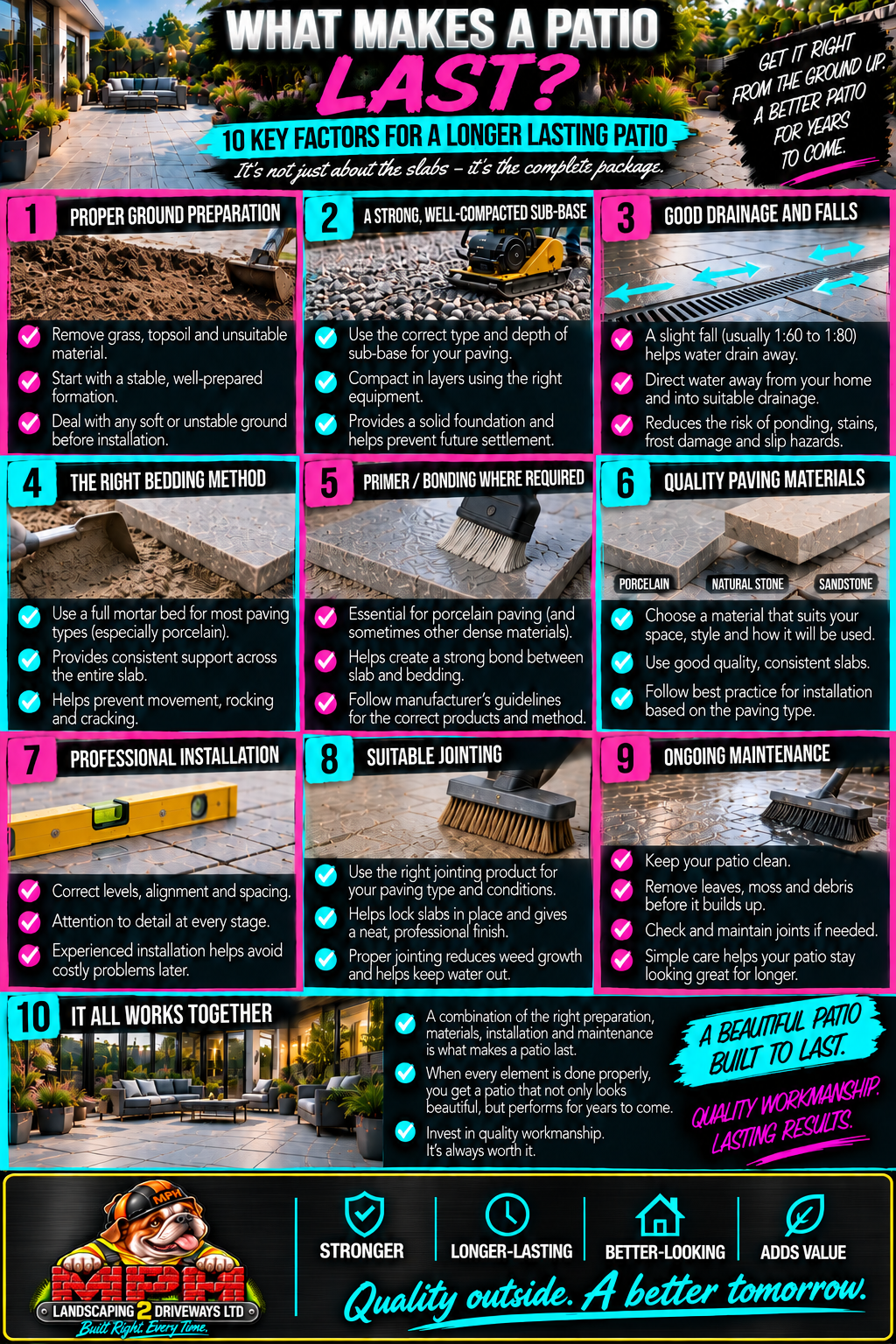
What makes a patio last? — illustrated guide

What makes a patio last?

A lasting patio depends on more than the choice of slab. Bring together preparation, suitable materials, drainage, careful installation and maintenance when planning your project.

Key points: What makes a patio last?
  • Start with a construction suited to the site and the way the patio will be used.
  • Pay attention to support, levels, bonding and jointing throughout installation.
  • Regular care and early attention to problems help protect the finished work.
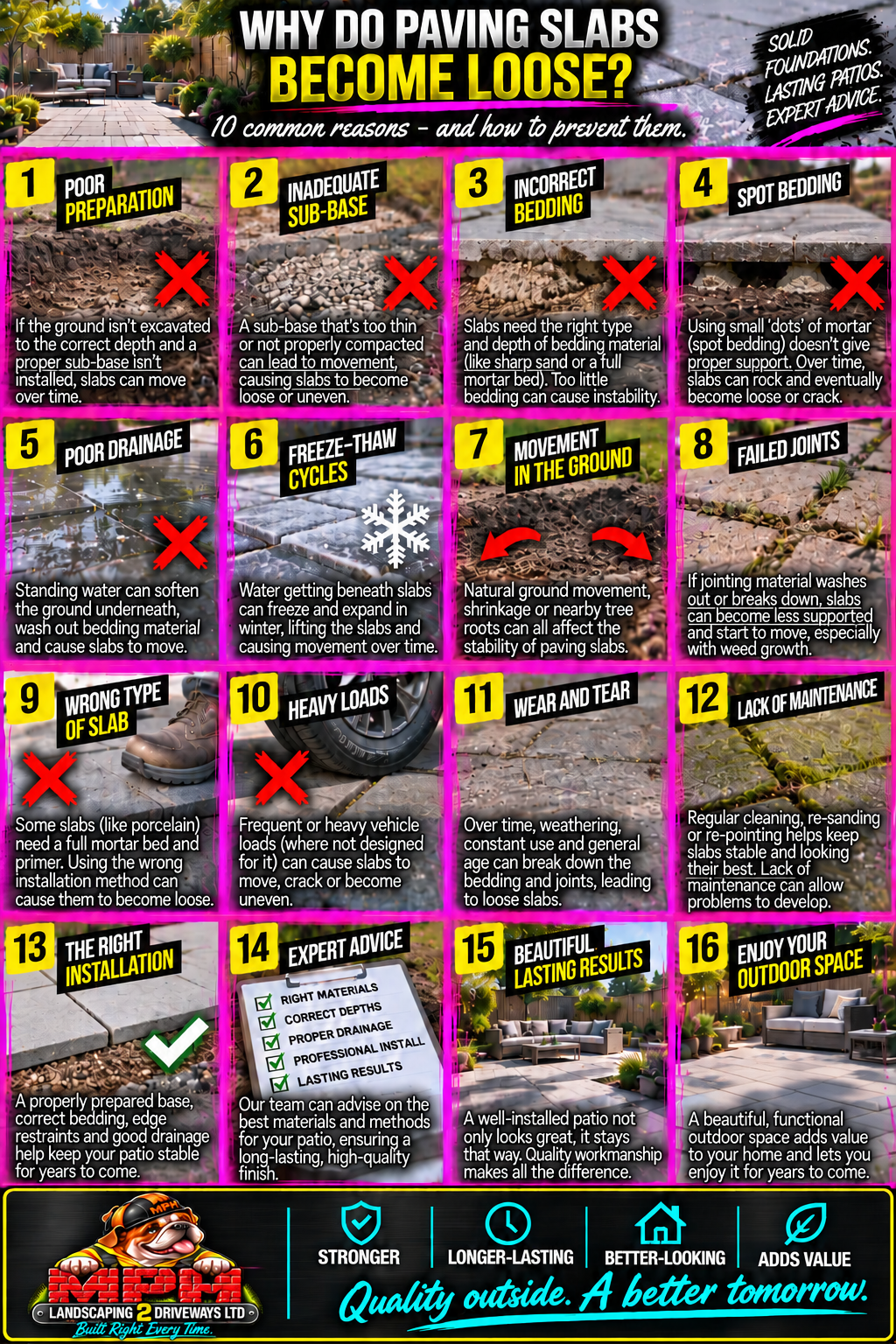
Why do paving slabs become loose? — illustrated guide

Why do paving slabs become loose?

Loose paving can have several causes beneath and around the slabs. This guide covers preparation, bedding, drainage, joints and the effects of movement and use.

Key points: Why do paving slabs become loose?
  • Slabs need suitable support from the ground and construction layers below.
  • Water, damaged joints and movement can affect paving stability.
  • Identify why a slab has loosened before carrying out a repair.
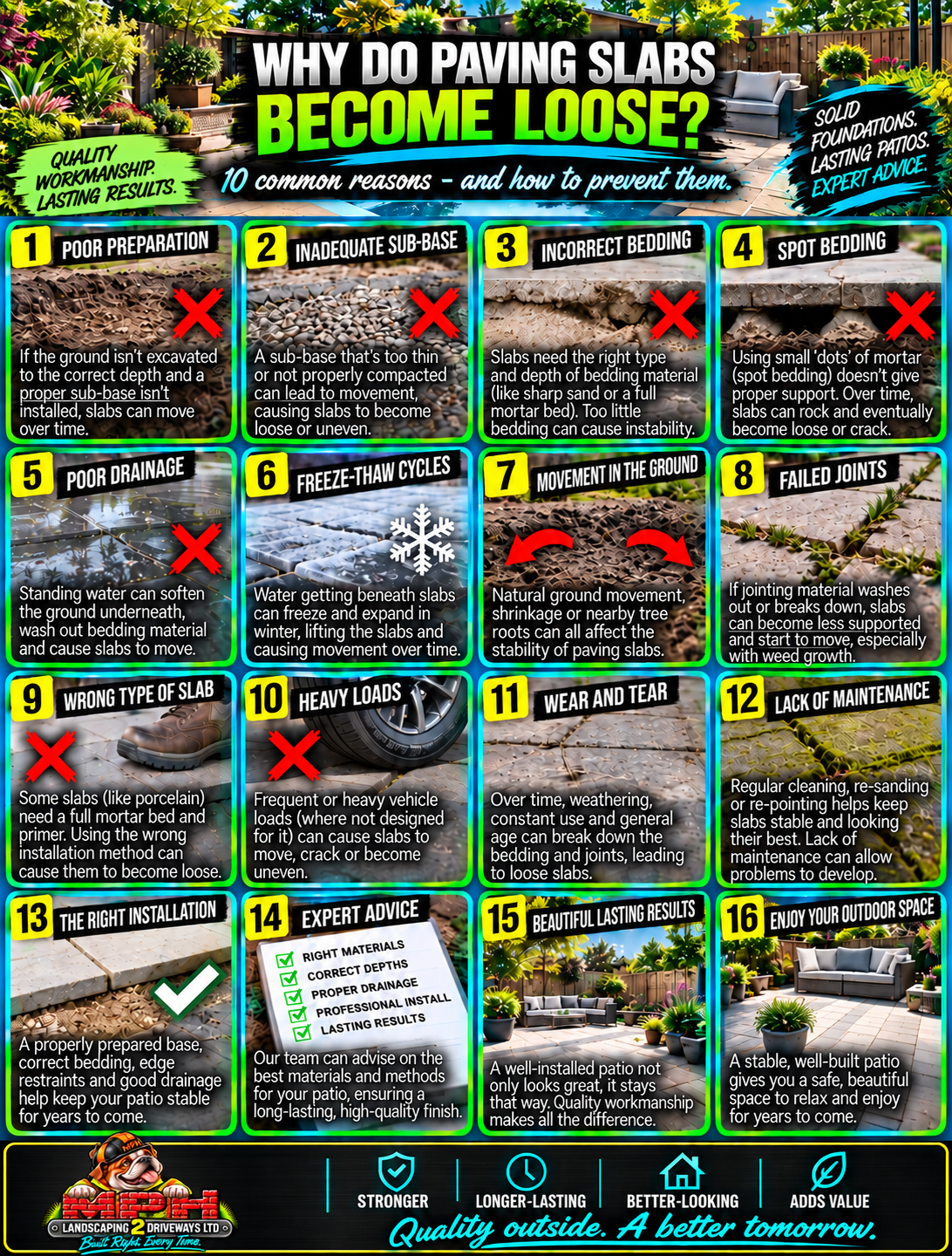
Loose paving: causes and prevention — illustrated guide

Loose paving: causes and prevention

Look more closely at the causes of unstable paving and how installation choices affect the result. The guide brings together common problems and prevention principles.

Key points: Loose paving: causes and prevention
  • Check ground preparation, compaction and the suitability of the bedding.
  • Choose slabs and construction appropriate for the expected use.
  • Maintain drainage and joints, and address developing movement early.
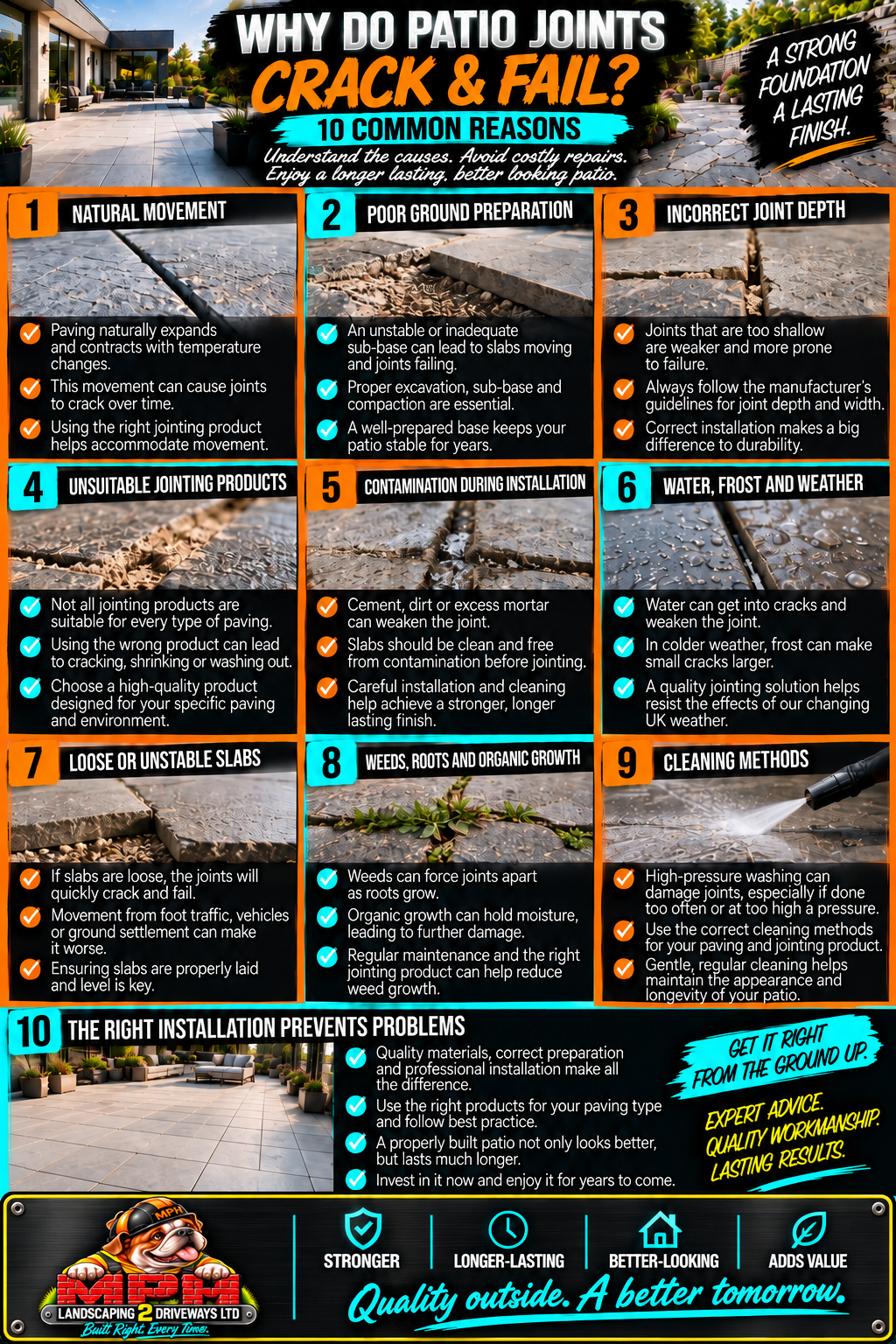
Why do patio joints crack and fail? — illustrated guide

Why do patio joints crack and fail?

Patio joints can deteriorate when the paving moves or the jointing is unsuitable for the conditions. Learn what to consider when checking cracks and failed joints.

Key points: Why do patio joints crack and fail?
  • Inspect the slabs as well as the material between them.
  • Joint width, depth and product selection need to suit the paving system.
  • Resolve underlying movement or drainage problems before renewing the joints.
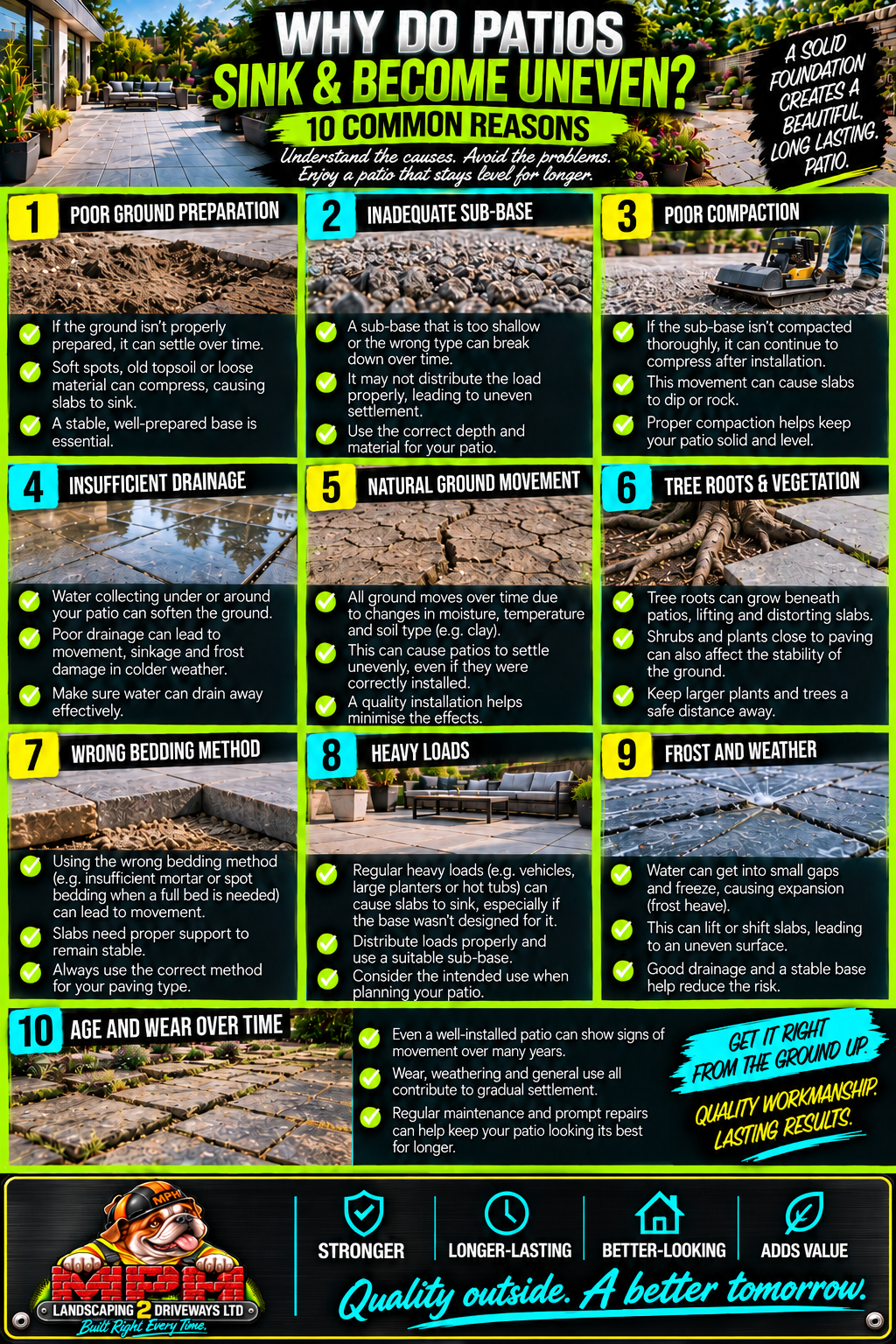
Why do patios sink and become uneven? — illustrated guide

Why do patios sink and become uneven?

Discover why patios develop low spots or uneven slabs, with a focus on ground conditions, sub-base preparation, compaction and water beneath the paving.

Key points: Why do patios sink and become uneven?
  • A patio relies on stable support across its whole area.
  • Settlement can affect both the appearance and the way water drains.
  • Assess the supporting layers before simply replacing or raising individual slabs.

Still have questions?
We’re here to help.

Expert advice. Free quotes. No obligation.

Get a free quotemphlandscaping2drivewaysltd@gmail.com
  • Expert craftsmanship
  • Hundreds of happy customers
  • Fully compliant & insured
  • Transforming outdoor spaces
  • Built to last
Built Right. Every Time.